Best Practicestrend
The Theology of Immersive Storytelling: Bridging Faith and Imagination in 2026
10/26/2026
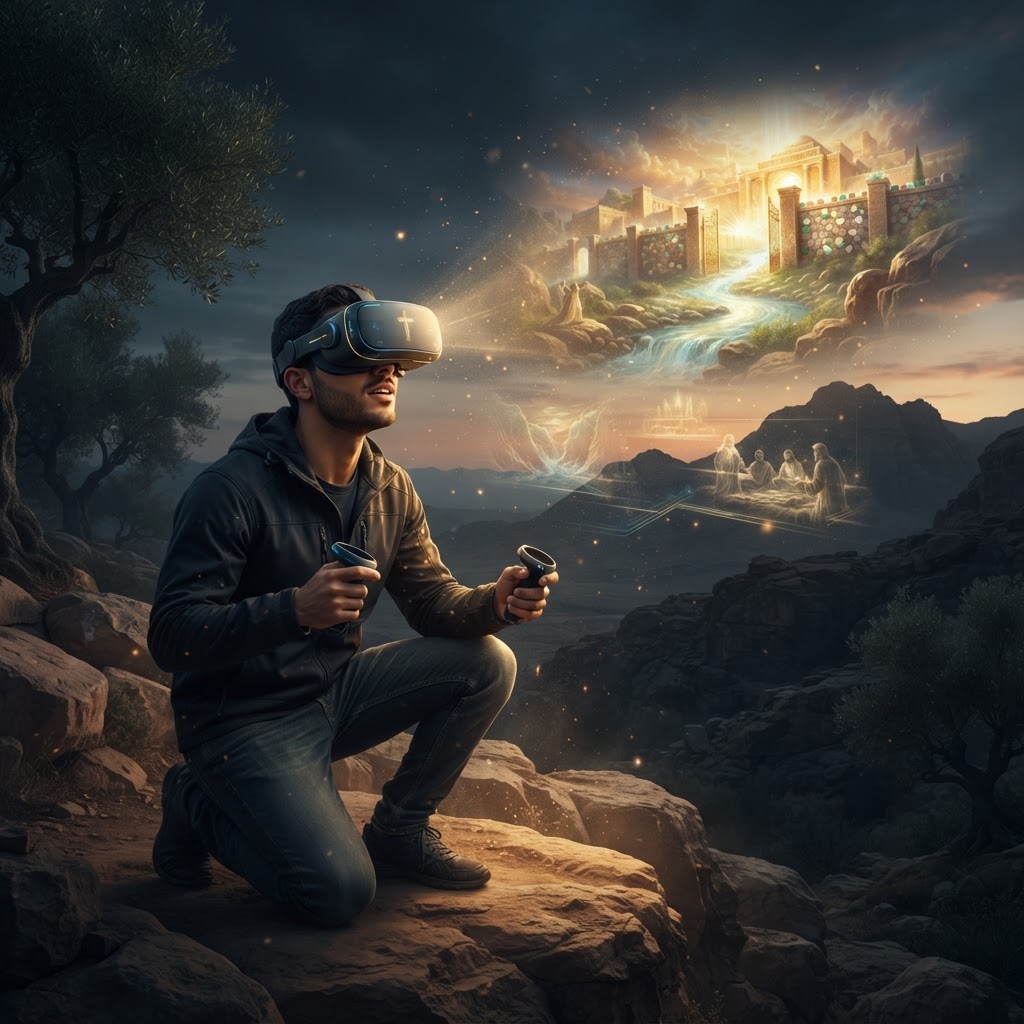
As we navigate the final quarter of 2026, the intersection of faith and technology has moved beyond novelty to become a profound space for spiritual encounter. In the Church, we have often debated the role of imagination. Can the mind’s eye truly be a vessel for the Holy Spirit? Does stepping into a digital representation of a biblical narrative detract from the text, or does it invite a deeper engagement with the Creator's design? The theology of immersive storytelling suggests that our capacity to imagine is not a distraction from truth, but a God-given faculty for perceiving the divine. God has always used the sensory—the smell of incense, the sight of the tabernacle, the taste of the Passover lamb—to anchor abstract truths in human experience. Imagination, in its purest form, is the bridge between the written Word and the living heart. When we read the Gospels, we are tasked with visualizing the dusty roads of Galilee, the texture of the garments, and the weight of the water in the nets. This cognitive act is inherently imaginative. Immersive technology like VR does not replace the Bible; rather, it provides a scaffolding for that God-given imagination. By visualizing the scale of the whale in the story of Jonah or the imposing shadow of Goliath, we move from passive reading to active participation. This is why platforms like ZionSphere have become so vital in our current landscape. By building spaces where believers can walk through these sacred accounts, ZionSphere leverages 2026-era innovation to foster a space where the 'what if' of curiosity meets the 'thus says the Lord' of scripture. In the Bible, God frequently commanded His people to 'remember,' which often involved creating physical markers—altars of stone, feast days, and architectural blueprints for the Temple. These were designed to engage the senses so that the heart would not forget. In an age of digital distraction, immersive biblical storytelling serves as a modern 'altar,' a space where the noise of the world is muted so that the voice of God can be heard through the context of His history. Some critics argue that digital environments create an artificial barrier to faith. However, we must consider the parable. Jesus spoke in stories, using the imagery of mustard seeds, lost coins, and vineyards to explain the Kingdom of God. He asked His listeners to imagine worlds they had never seen to understand truths they had not yet grasped. If a story told by a master storyteller can transport a listener's heart to the Kingdom of God, why should we fear the technology that allows us to walk through the landscape of that story? The theology of immersion is rooted in the Incarnation itself. Christ did not just give us a manual; He gave us His presence. He walked among us, ate with us, and wept with us. When we use VR to immerse ourselves in the narrative of scripture, we are leaning into the principle that the heart is reached through experience. We are not creating new scripture; we are placing ourselves in the path of the original, allowing the Holy Spirit to illuminate the familiar in ways that feel fresh and urgent. As we look toward the close of 2026, the Church stands at a threshold where these tools can either be ignored or redeemed for the glory of God. Redeeming them means demanding excellence, theological integrity, and a heart for worship. It means ensuring that when we step into a digital representation of the life of David, we are not seeking entertainment, but an encounter. It means recognizing that every pixel and every line of code is an opportunity to declare the grandeur of God. Imagination is the canvas upon which the Holy Spirit paints. When we offer that canvas back to Him, stripped of worldly vanity and focused on the truth of His Word, we find that technology becomes a mirror, reflecting the eternal narrative back to our own souls. Our stories matter because they are part of His story. As we continue to refine how we share the Gospel in this digital era, let us embrace the beauty of imagination as a sacred trust. Whether we are reading a physical Bible or walking through the digital landscape of ZionSphere, our goal remains the same: to behold Him more clearly, to love Him more dearly, and to follow Him more nearly. To see the treasures hidden in the pages of scripture is a lifelong journey. We invite you to step into the narrative and experience the power of immersive scripture for yourself. Discover how we are merging faith and technology at zionsphere.world.
This article was brought to you by ZionSphere, a virtual faith experience. Connect with us at www.zionsphere.world.
Keywords
biblical VRZionSpherefaith technologyChristian gamingimmersive scripturetheology of imaginationdigital ministrybiblical storytelling
Stay in the Loop
Get the latest ZionSphere news and articles delivered to your inbox.